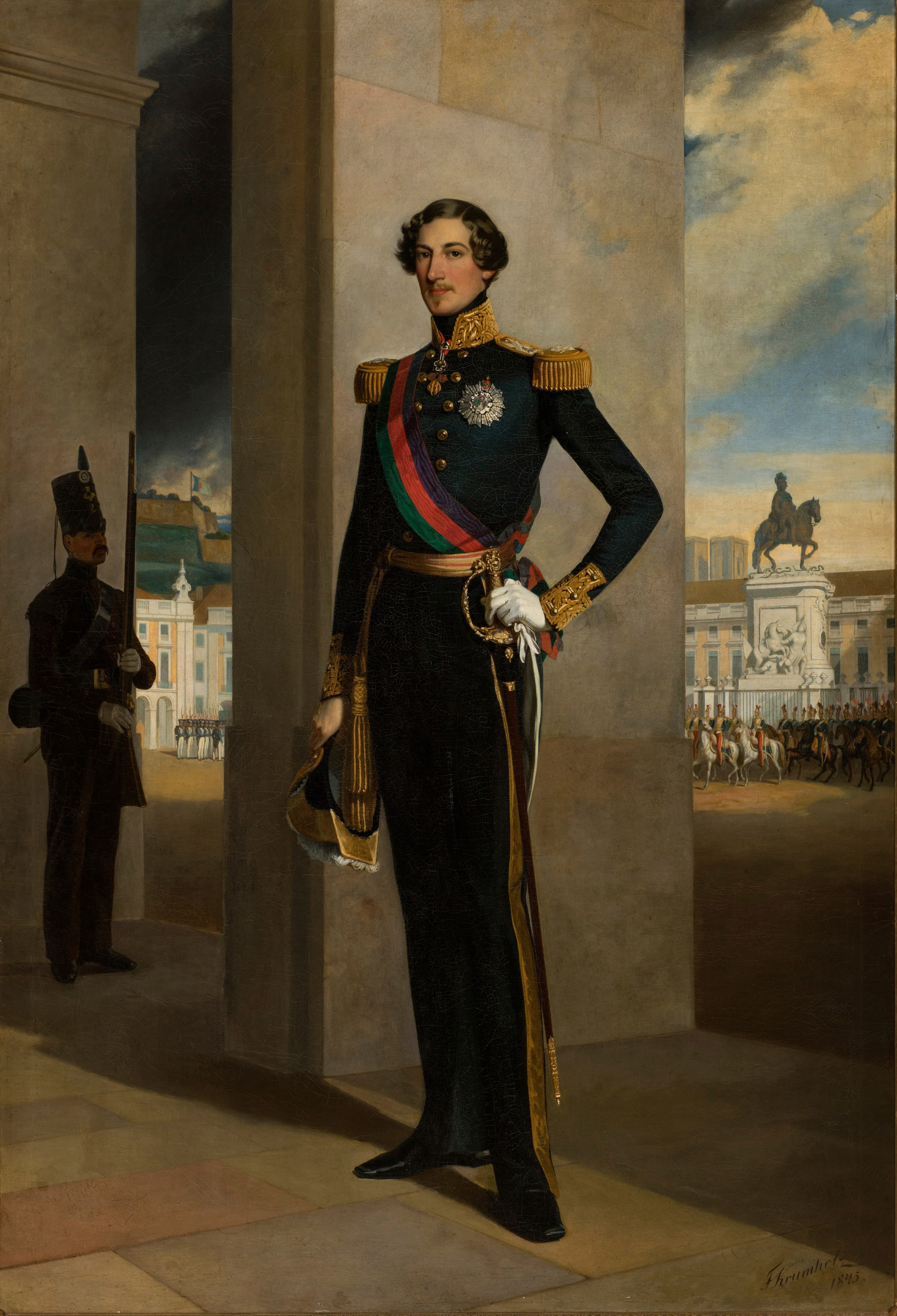
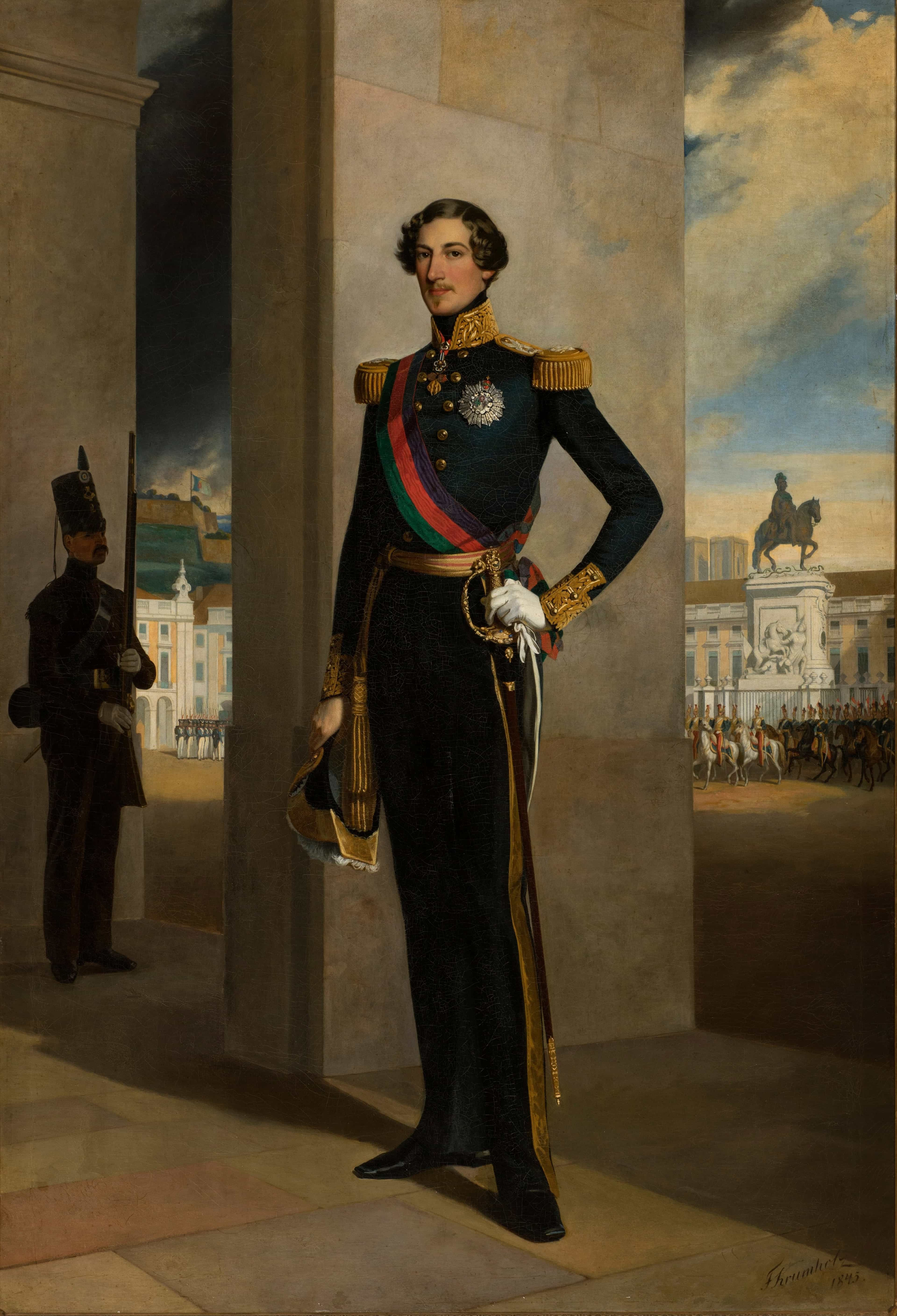
Portrait of Ferdinand II of Portugal
Ferdinand Krumholz
From €64
Collection
Museum-quality reproductions on 310gsm textured cotton rag paper.
Shop all prints by Ferdinand KrumholzArtistic Style
Style Evolution
Krumholz’s work aligns with mid-19th-century Austrian academic and regional practices: early training and steady professional activity produced works marked by compositional clarity and refined technique valued by collectors seeking historically grounded decorative paintings.
Palette
Subjects
Techniques
Topics
Ferdinand Krumholz (1810-1878) was an Austrian 19th-century painter whose work exemplified mid-19th-century Austrian painting traditions and refined academic technique.
Learn about the life of Ferdinand Krumholz
Signature Works
See all available printsBiography
Ferdinand Krumholz (1810-1878) was an Austrian 19th-century painter whose work exemplified mid-19th-century Austrian painting traditions and refined academic technique.
Ferdinand Krumholz was born on 7 May 1810 in Dvorce. Details about his family background, formal education, and early training are scarce in available records. What is documented is his identity as an Austrian painter active in the 19th century, a period in which regional academic and genre painting traditions shaped many artists’ careers. Krumholz lived until 11 January 1878, passing away in Bern, where he died at the age of 67.
Because primary documentation about Krumholz’s training and specific teachers is limited in accessible sources, a comprehensive account of his studies and early mentors is not available here. Like many 19th-century Central European painters, his career unfolded during decades when academic standards, regional exhibitions, and local patronage systems influenced practice and subject choices.
Krumholz worked during the mid-19th century when academic painting and regional genre and landscape subjects were prevalent. His active years fit within the broader context of Austrian and Central European painting traditions that favored refined draftsmanship and clear compositional structure.
Specific titles of Krumholz’s paintings are not listed in the supplied records. Because precise artwork attributions and exhibition histories are not provided here, this profile focuses on Krumholz’s standing as a 19th-century Austrian painter rather than on individual canvases.
Surviving descriptions and attributions indicate Krumholz’s alignment with 19th-century Austrian academic and regional practices. Such painters typically emphasized careful drawing, controlled brushwork, and compositional clarity—qualities attractive to collectors seeking decorative, well-composed works. Krumholz’s paintings can be appreciated for their potential to harmonize with interior settings and to convey the restrained visual language of his era.
Documented direct influences on Krumholz or artists he influenced are not provided in the available data. His legacy lies in his contribution to the broader corpus of 19th-century Austrian painting: works from this period continue to interest collectors and institutions that value historical genre and landscape painting for both cultural context and decorative appeal.
Beyond birth in Dvorce (1810) and death in Bern (1878), specific personal details—such as family life, residences beyond these places, or personal correspondence—are not recorded in the provided material and therefore are not included here.
Krumholz’s paintings, as examples of mid-19th-century Austrian practice, attract interest from collectors who value 19
Awards
Frequently Asked Questions
Portrait of Ferdinand II of Portugal