📦 Sitewide sale now on: 30% off + free shipping 📦
Home/Artists/William Morris
SymbolismArts and Crafts movement

William Morris

1834 — 1896, from United Kingdom

William Morris (1834-1896) was a British Arts and Crafts designer, writer, and socialist whose richly patterned textiles and book designs transformed decorative arts.

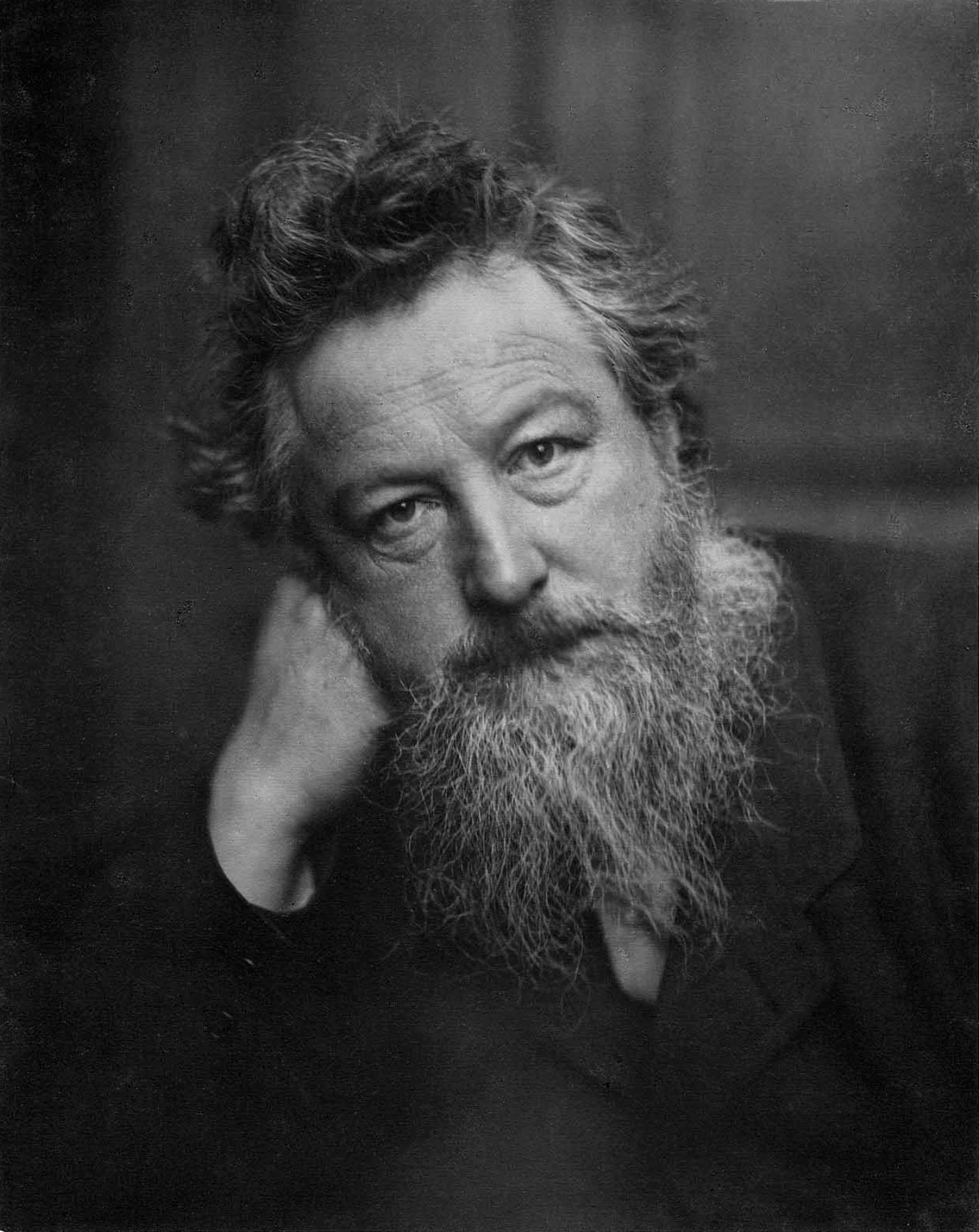
Portrait of William Morris

Collection

Shop William Morris Prints

Museum-quality reproductions on 310gsm textured cotton rag paper.

Shop all prints by William Morris

Artistic Style

Style Evolution

Morris began with medieval and natural sources, developing richly patterned textiles and wallpapers in his middle period; later he expanded into book design and publishing while maintaining a commitment to handcrafted processes and socially engaged aesthetics.

Palette

  • earthy greens
  • muted reds and ochres
  • deep indigo and blues
  • harmonized natural tones

Subjects

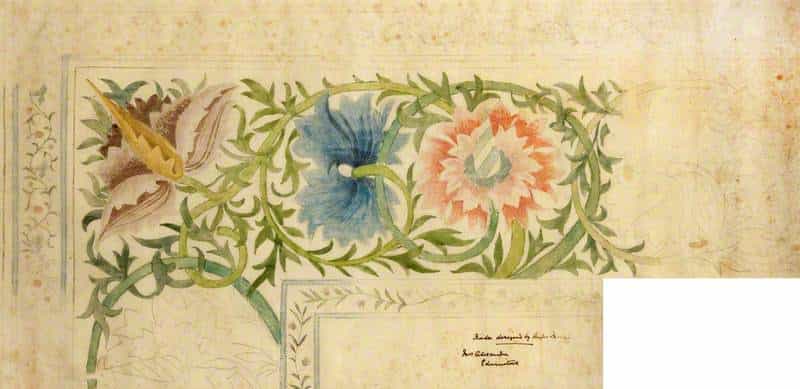
  • stylized floral motifs
  • foliate and vine patterns
  • medieval-inspired ornament
  • decorative repeats for interiors
  • book illustrations and ornament

Techniques

  • hand block printing
  • repeat-pattern textile design
  • dense vegetal ornamentation
  • integrated interior schemes
  • book typography and layout

Topics

BritishArts and Craftstextile designwallpaper19th centurybook designhandblock printingdecorative arts

William Morris (1834-1896) was a British Arts and Crafts designer, writer, and socialist whose richly patterned textiles and book designs transformed decorative arts.

Learn about the life of William Morris

1834

Born in Walthamstow, England

1853

Matriculated at Oxford University (student years)

1861

Established a design workshop and business focused on textiles and interiors

1870

Workshop production expands; pattern designs become widely known

1880

Active in publishing and book design; integration of typography and decorative design

1891

Founded a private press to revive traditional book arts (Kelmscott Press)

1896

Died in Hammersmith, leaving a lasting legacy in decorative arts

1900

Posthumous recognition and consolidation of the Arts and Crafts movement's influence

William Morris (1834-1896) was a British Arts and Crafts designer, writer, and socialist whose richly patterned textiles, wallpapers, and typographic work reshaped decorative arts and championed craft against industrial mass production.

Early Life and Background

William Morris was born in Walthamstow in 1834 and later lived and worked in London, including Hammersmith where he died in 1896. Educated at Oxford, he trained among literary and artistic circles that fostered his interest in medieval art and craft traditions. His upbringing and education gave him a foundation in literature, medievalism, and a commitment to combining beauty with everyday utility.

Artistic Development and Periods

Morris's career unfolded across several overlapping practices: design, printmaking, book production, and political writing. He moved from early design experiments into collaborative workshops and publishing ventures.

Early Design Period

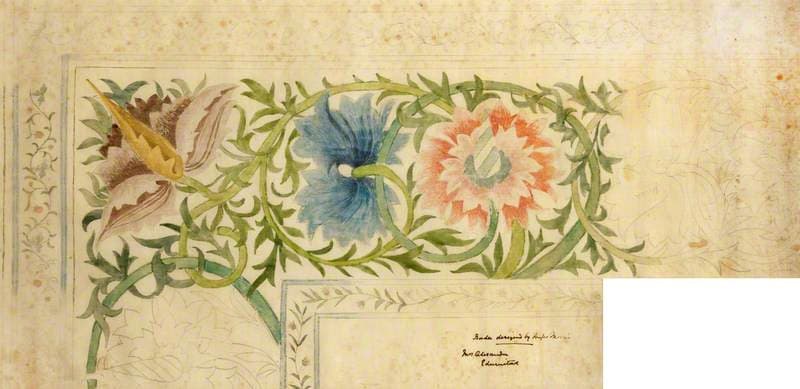
In his early career Morris developed the repeat-pattern textile and wallpaper designs that would become his signature, drawing on plant forms, medieval motifs, and hand-crafted techniques.

Workshop and Enterprise Period

Morris established a design firm and collaborative workshop model that prioritized artisanal craft and integrated design into domestic interiors. He promoted hand-block printing and close collaboration between designers and craftspeople.

Later Publishing and Political Period

Later in life Morris expanded into book design and publishing, producing typographic work and writings that reflected his social and aesthetic ideals, while advocating for socialist reform and the dignity of labor.

Major Works and Achievements

Morris is best known for his textile and wallpaper designs and for founding an influential design workshop and publishing enterprise that set new standards for decorative arts and book production. His achievements include pioneering production methods that emphasized handcrafted quality and reviving traditional decorative motifs for modern interiors.

Style and Technique

Morris favored hand-crafted processes: block printing for textiles and wallpapers, careful pattern repeats, dense vegetal ornament, and attention to materiality. His designs balance formal symmetry with lively organic detail, using pattern to animate walls and fabrics.

Influence and Legacy

Morris was a central figure in the Arts and Crafts movement, influencing generations of designers, architects, and craftspeople who sought to reunite art and craft. His emphasis on craft, social purpose, and integrated interiors shaped design education and decorative taste into the 20th century and remains influential in contemporary craft and heritage design.

Personal Life Context

Morris combined artistic practice with political and literary activity, writing on art, society, and history while organizing workshops that embodied his social ideals. He lived and worked in domestic and communal settings that integrated

Frequently Asked Questions

What are William Morris's most famous works?+
William Morris is best known for his textile and wallpaper designs and for his work in book design and publishing. His richly patterned wallpapers and fabrics—characterized by dense botanical motifs and careful repeat structures—are the works most associated with his lasting reputation in decorative
What is William Morris's style?+
William Morris's style is rooted in the Arts and Crafts movement, combining medieval-inspired motifs with stylized natural forms. His designs favor dense, repeating botanical patterns, careful symmetry, and handcrafted techniques such as block printing, producing decorative surfaces intended to be
What made William Morris unique?+
Morris uniquely combined design practice, political thought, and publishing. He placed equal importance on aesthetic quality and the dignity of craft production, reviving hand techniques and integrating pattern into everyday interiors. His holistic approach—designing textiles, wallpapers, furniture,
What are three of William Morris's masterpieces?+
Morris's masterpieces are widely considered to be his landmark textile and wallpaper designs and his typographic book projects. Collectors and historians point to his richly patterned repeat designs for interiors and his private-press books as among the most important achievements of his career.
What movement was William Morris part of?+
William Morris was a leading figure in the Arts and Crafts movement, a late-19th-century reaction against industrial mass production that emphasized handcrafted quality, traditional techniques, and the integration of beauty into everyday objects and interiors.
What influenced William Morris?+
Morris drew on medieval art and literature, nature, and traditional craft techniques. His contacts with artists and writers of his time and his study of historical decorative arts informed his emphasis on pattern, materiality, and handcraft. These influences underpinned his design vocabulary and
William Morris - British Arts and Crafts Artist | Art Prints