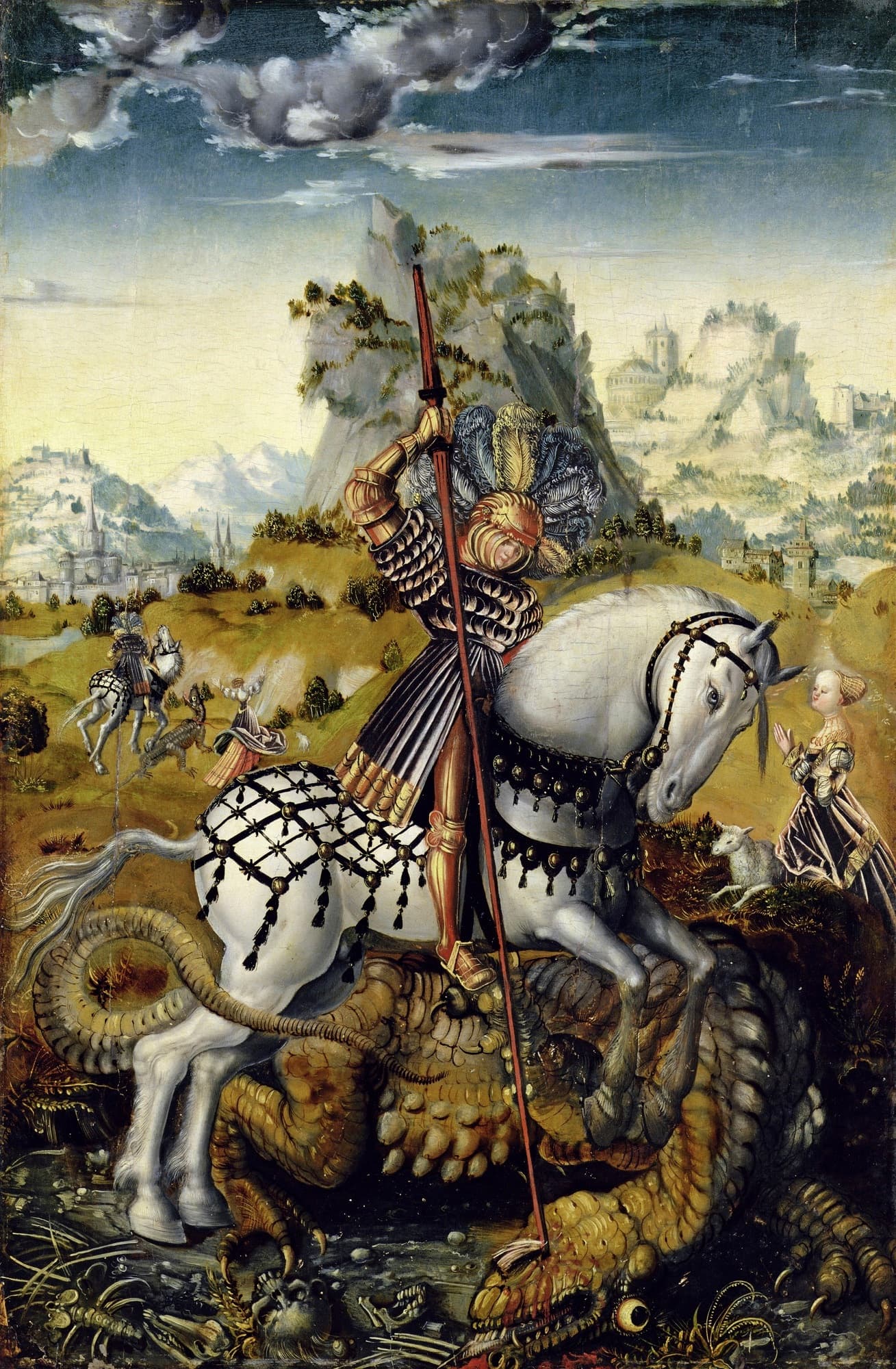
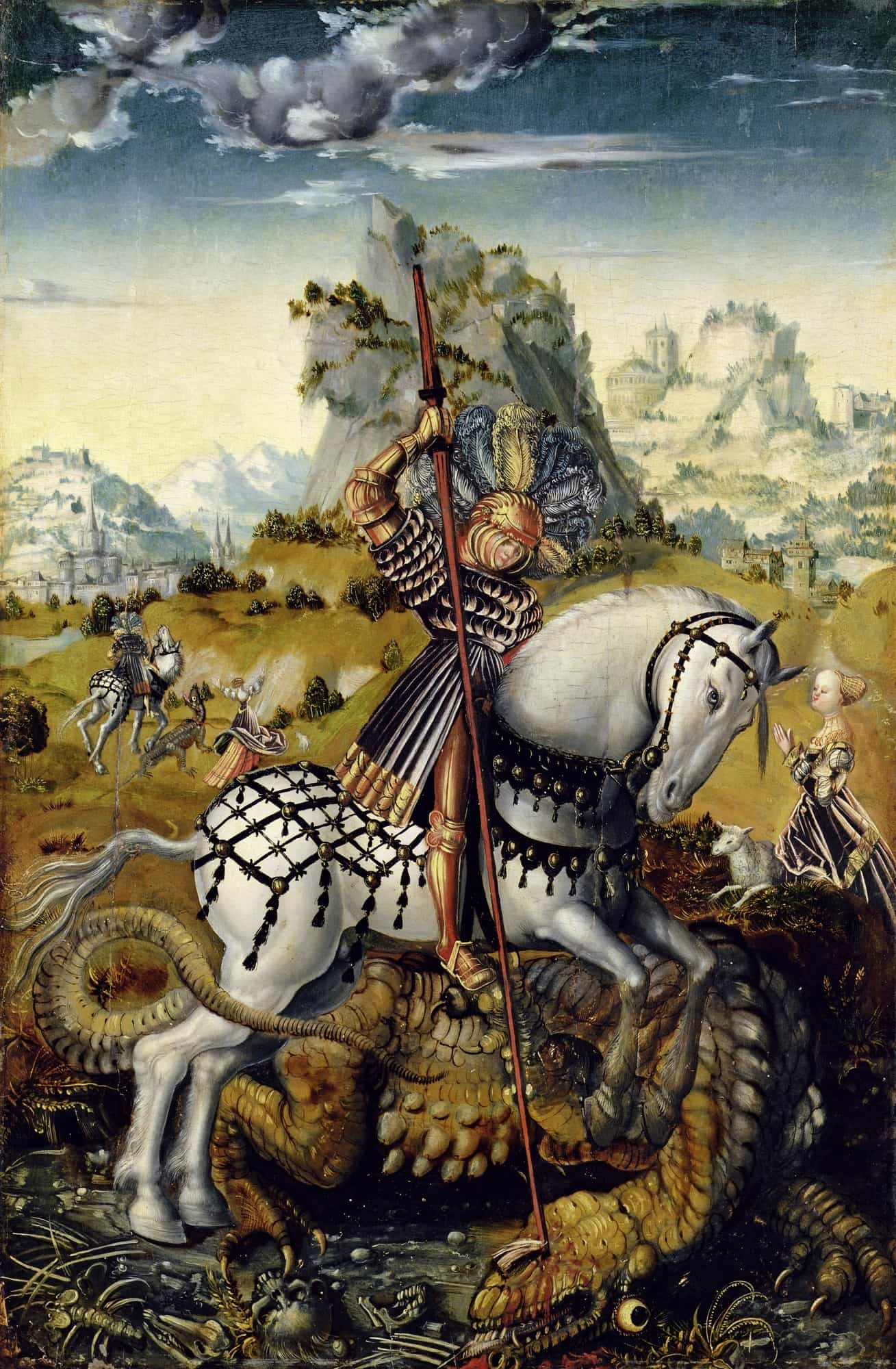
St George on Horseback
Master of the Döbeln Altarpiece
From £54
Collection
Museum-quality reproductions on 310gsm textured cotton rag paper.
Shop all prints by Master of the Döbeln AltarpieceArtistic Style
Style Evolution
The Master's work remains rooted in the Late Gothic altarpiece tradition: early panels emphasize linear clarity and iconographic detail, while later attributed works show increasingly refined ornament and decorative surface treatments typical of mature regional workshop practice.
Palette
Subjects
Techniques
Topics
Master of the Döbeln Altarpiece (dates unknown) was a German Late Gothic painter whose distinctive altarpiece panels and devotional imagery exemplify regional sacred art.
Learn about the life of Master of the Döbeln Altarpiece
Signature Works
See all available printsBiography
Master of the Döbeln Altarpiece (dates unknown) was a German Late Gothic painter whose distinctive altarpiece panels and devotional imagery exemplify regional sacred art with refined detail and expressive figures.
The artist known as the Master of the Döbeln Altarpiece remains anonymous; his personal name and life dates are unknown. Identified by scholars through an attributed Döbeln altarpiece, he is placed within the German Late Gothic tradition that produced richly carved and painted altarpieces for parish churches and monastic settings. Little documentary evidence survives about his training, but his work shows mastery of workshop practices common to late medieval German panel painting.
The Master's work reflects the conservative devotional program of Late Gothic northern Europe while also engaging local stylistic tendencies. He likely worked within a regional workshop system that combined painting with carpentry and polychromy, producing multi-paneled altarpieces and devotional images for liturgical use.
During his active period, the Master executed altarpiece panels that balance narrative clarity with ornate detail. The compositions emphasize legible gestures and facial expression to communicate sacred stories to parish congregations.
While the artist's oeuvre remains tied to a single name, the Döbeln altarpiece — the work that defines his notname — stands as the principal attribution. That altarpiece and associated panels demonstrate his skill in integrating painted scenes with sculptural and architectural frameworks typical of Late Gothic church furnishings. These works are valued for their decorative impact, narrative clarity, and suitability for liturgical interiors.
The Master's technique combines precise linear drawing, careful modeling of faces and drapery, and an eye for ornament. His palette and surface treatment were chosen to read clearly in candlelit interiors; gilding and decorative patterns often enliven backgrounds and garments. The paintings reveal a command of iconographic convention, rendered with an emphasis on devotional immediacy.
As an anonymous regional master, he influenced local workshops and contributed to the visual culture of parish devotion in his area. His altarpiece panels offer insight into the transmission of Late Gothic forms across German-speaking regions and remain important to scholars studying workshop practice and iconography.
No reliable biographical details about the artist’s personal life survive. His work is best understood through the objects attributed to his hand and the liturgical contexts for which they were created.
Works attributed to anonymous medieval masters are prized by collectors and museums for their historical importance, decorative richness, and the
Frequently Asked Questions
St George on Horseback